
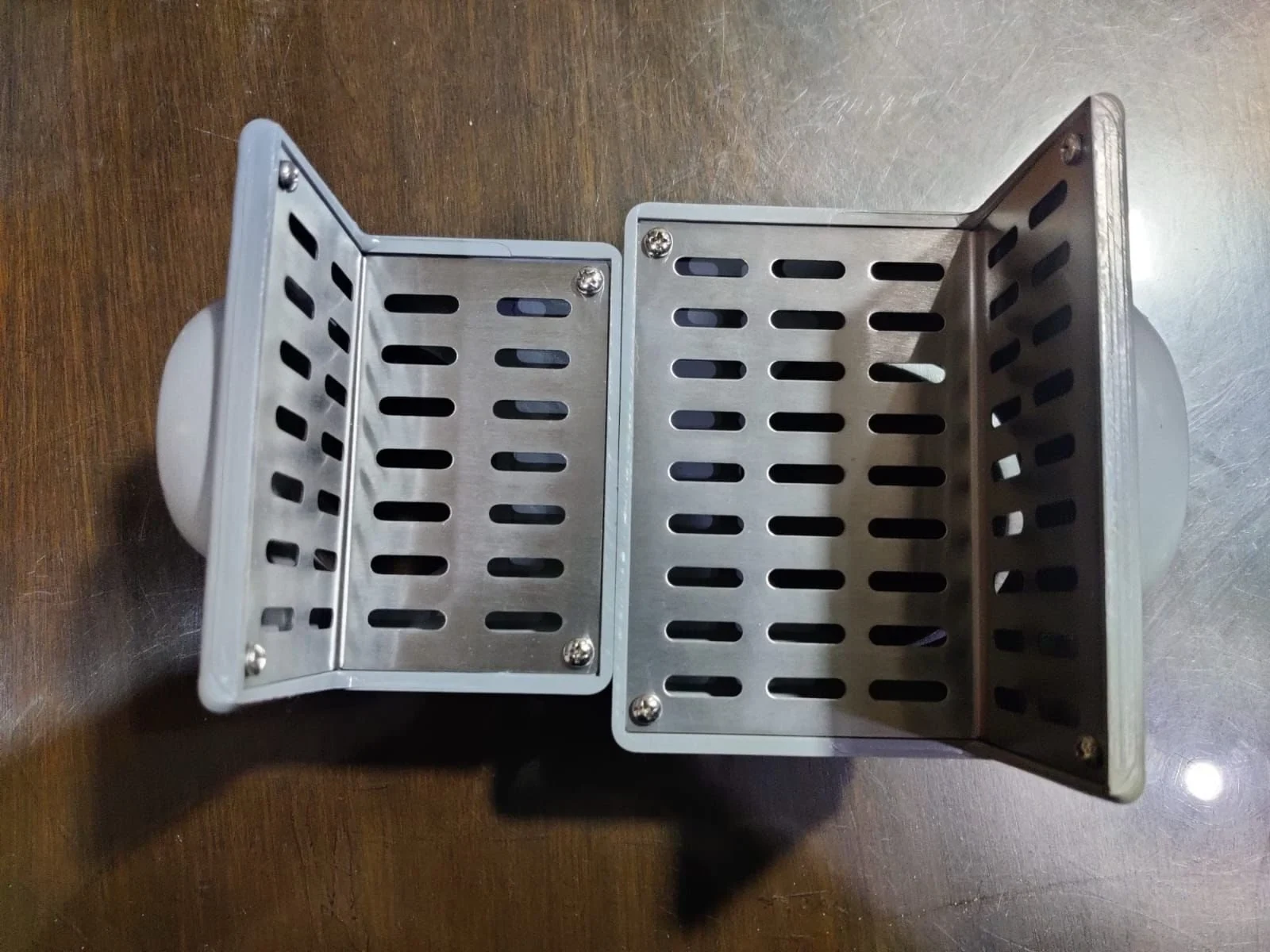

Moving Water Off a Flat Roof Before It Turns Into a Structural Load
Ponding water is the most common condition we find on flat roofs that are otherwise in decent shape, and it is rarely a membrane problem at the root. Most of the time the drainage system is undersized, clogged, or was never designed with enough slope to move water off before the next rain arrives. We repair, clear, and retrofit drains and scuppers across the county's flat-roof building stock.
Internal Drains Versus Scuppers
Internal roof drains, common on the large flat roofs at production and distribution buildings, move water down through the building's interior plumbing. Scuppers, more common on parapet-walled buildings, discharge water horizontally through the wall to an exterior downspout or splash block. Each system fails differently: internal drains clog with debris and sit below grade of the surrounding membrane if not maintained, while scuppers can be undersized for the roof area they serve or blocked by debris caught at the wall opening.
Both systems need a functioning overflow path, whether that is a secondary overflow drain set slightly higher than the primary or a dedicated overflow scupper, since code requires a backup route for water once the primary system is overwhelmed.
Why Ponding Water Matters
Water sitting on a roof for more than 48 hours after a rain event accelerates membrane aging, adds structural load the roof deck was not necessarily designed to carry long-term, and often signals that the drainage design itself, rather than only a clog, is the underlying issue. On older roofs with flat or minimal-slope insulation, ponding in the same low spot after every storm is a pattern worth fixing at the source rather than repairing repeatedly.
- Clearing debris, leaves, and roofing granules from drain bowls and scupper openings on a regular schedule
- Confirming drain strainers are present and secured, since a missing strainer is a common cause of downstream pipe clogs
- Checking that secondary overflow drains or scuppers are set at the correct height above the primary system
- Adding tapered insulation crickets at chronic low points during a recover or reroof rather than accepting the existing slope
- Verifying downspout and discharge piping is not undersized for the roof area it now serves after any building addition
Retrofitting Drainage During a Reroof
A reroof or recover is the right time to correct a drainage problem that has been a recurring maintenance issue, since the membrane is already open and tapered insulation can be redesigned without a separate mobilization. We see this most often on large open production and warehouse roofs, including big flat expanses like those at production and staging buildings around Lititz, where a single low point collects water across a wide area and a targeted cricket or additional drain solves what years of patching never did.
Seasonal Drainage Demands
This county's drainage systems see two distinct stress periods: a fast snowmelt after a heavy wet-snow event, when a lot of water moves at once and any clog becomes obvious immediately, and summer thunderstorm downpours that can overwhelm an undersized system in minutes. We clear and inspect drains ahead of both seasons as part of a standard maintenance visit, since a clog found in October is a lot cheaper to fix than an interior water event found in January.
Coordinating Interior Drain Tie-Ins With Other Trades
Adding or relocating an internal drain is not a roofing-only decision. The new drain has to tie into interior plumbing that a mechanical or plumbing contractor controls below the roof deck, and on an occupied building that tie-in often has to happen without shutting down the space underneath. We coordinate directly with the GC or the owner's plumbing contractor on sizing, tie-in location, and scheduling rather than cutting a new drain opening and leaving the connection for someone else to sort out.
On institutional projects where the plumbing scope is bid separately from the roofing scope, we provide the roof-side details early enough for the plumbing contractor's own submittal to reference the correct drain size and location, which avoids a coordination gap that shows up as a change order later. We attend the pre-construction coordination meeting when a project's schedule calls for it, so the drain layout is agreed on paper before either trade opens their portion of the work.
Drainage Questions From Facility Teams
How do we know if our roof has a drainage design problem versus a clog?
If the same area ponds after every rain regardless of how clear the drains are, that points to slope or drain placement rather than debris, and we will say so rather than repeating a clearing visit that will not fix it.
What does code require for overflow drainage?
A secondary overflow path, either a raised overflow drain or a dedicated overflow scupper, is generally required so water has somewhere to go if the primary system is blocked or overwhelmed.
Can drains be added without a full reroof?
Sometimes, depending on the membrane condition and where the new drain needs to tie into interior plumbing. We assess this case by case rather than assuming it always requires reopening the whole roof.
How often should drains be cleared?
Twice a year at minimum, before winter and after, with additional clearing after any storm that brings heavy debris onto the roof.
Does standing water always mean a leak is coming?
Not immediately, but sustained ponding accelerates membrane wear and increases the odds of a future leak at that location, so it is worth correcting rather than monitoring indefinitely.
Repairing What Wind, Hail, and Heavy Snow Actually Do to a Flat Roof
Explore this commercial roofing scope
TPO Specs for the Turnpike-Exit Warehouse Corridor
Explore this commercial roofing scope
Acrylic Coatings for the Amish-Country Tourism Strip
Explore this commercial roofing scope
Built-Up Roofing on Institutional Campuses That Can't Go Off-Line
Explore this commercial roofing scope