
PVC for Roofs That Live Above Grease, Steam, and Kitchen Exhaust
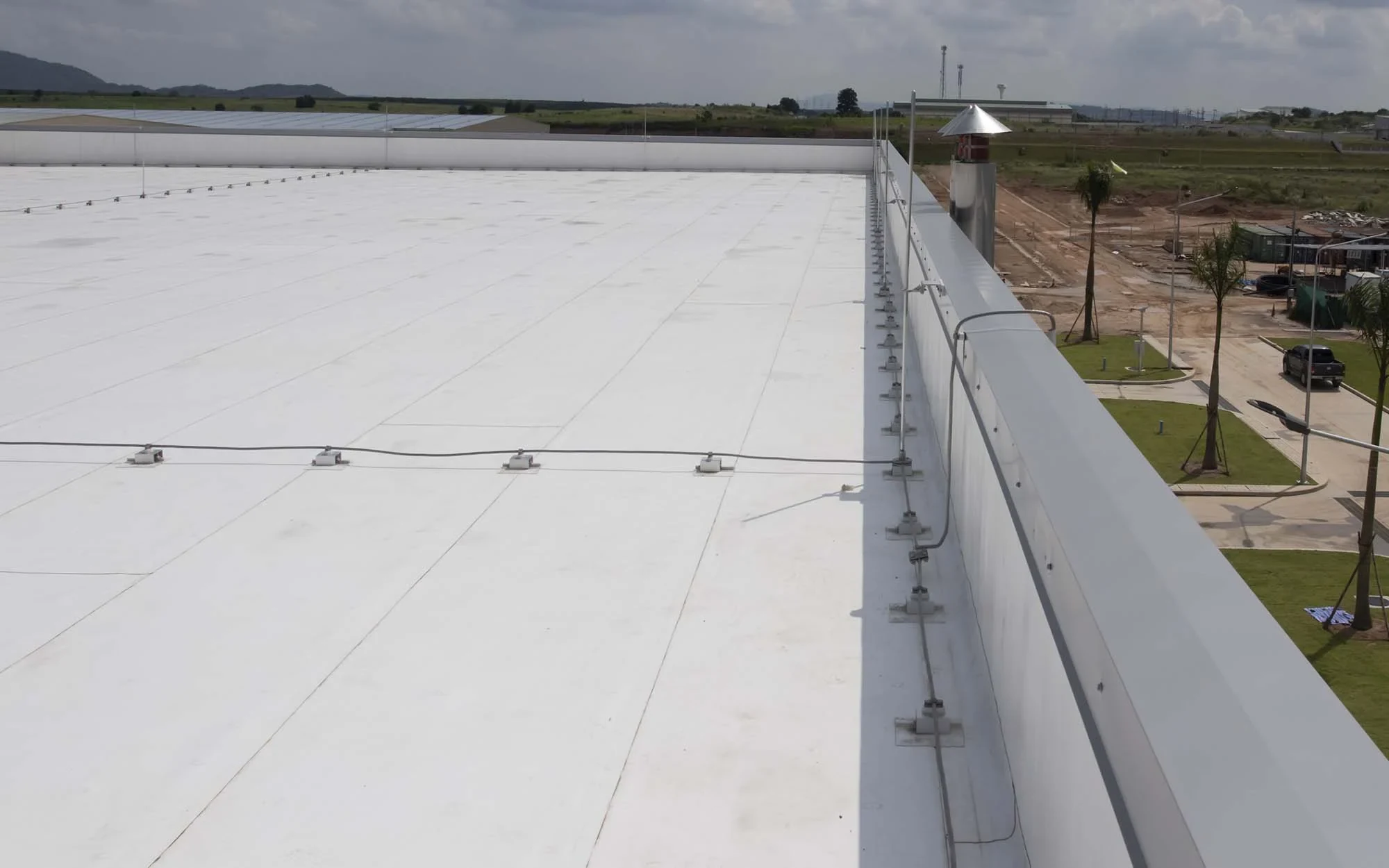
PVC's chemical resistance is the reason it shows up on more food processing and commercial kitchen roofs in Lancaster County every year. This page covers where we spec it, why it holds up against fryer and processing exhaust better than most membranes, and what the submittal package looks like on a food-plant or institutional-kitchen roof.
Mount Joy's Food Processors Are the Clearest Case for PVC
Mount Joy's industrial parks include several food processing operations where rooftop exhaust carries grease, oil, and cleaning-chemical residue that degrades EPDM and, over enough years, works on TPO too. PVC's plasticizer chemistry resists that kind of exposure better than either alternative, which is why it's become our default recommendation for processing plants rather than an upsell. We size the membrane and flashing package around exhaust hood locations first, because that's where these roofs fail years before the field membrane shows any wear.
Wash-down runoff is the other variable that separates a food plant roof from a standard warehouse. Drains near loading and processing areas see higher volumes of water carrying detergent residue than a typical roof drain handles, and we check drain sizing and slope on every food-plant quote rather than assuming the original layout still matches current production volume.
Senior Living Campuses Have the Same Exhaust Problem, Different Scale
Quarryville's mix of ag commerce and one of the county's established retirement communities points to a pattern we see across the senior living sector: large commercial kitchens serving hundreds of residents a day, with exhaust hood volume closer to a restaurant than a household kitchen. Willow Street's senior living campuses run the same dynamic. A CCRC's dining hall roof takes the same grease and steam exposure as a food processing plant's, just concentrated around fewer, larger hood penetrations.
On these campuses we usually see PVC specified around the kitchen wing specifically, sometimes paired with a different membrane on the rest of the roof where exposure is lower. That mixed approach keeps material cost reasonable while putting the more expensive, more resistant system exactly where it's needed.
What a PVC Submittal Package Includes
- Membrane thickness and reinforcement scrim specification
- Chemical resistance data specific to expected exhaust exposure
- Hot-air welded seam detail and quality control plan
- Drain and scupper sizing relative to current wash-down volume
- Flashing detail at every exhaust hood and grease trap vent
- Manufacturer warranty terms and inspection schedule
We build that package before quoting so a facilities director or food-safety compliance officer can review the chemical resistance data against their specific processing chemicals, not a generic industry average.
Cost Compared to TPO, and When the Premium Is Worth It
PVC typically costs more per square foot than TPO. On a warehouse or distribution building with no chemical exposure, that premium usually isn't worth paying. On a food processing plant, a commercial kitchen wing, or any building with regular grease, oil, or solvent exposure on the roof surface, the extended service life PVC delivers over a cheaper membrane usually pays for the difference well before the warranty period ends. We show both numbers side by side on quotes where the choice isn't obvious, so the decision is based on total cost over the roof's service life rather than the lowest bid line.
Freeze-Thaw Still Applies, Even on a Chemical-Resistant Membrane
PVC's chemical resistance doesn't exempt it from Lancaster County's winter cycle. Ponding water at low points still refreezes and works into seams over repeated cycles, and we check slope and drain layout on PVC roofs with the same attention we'd give any other system. The membrane resists chemical attack better than the alternatives; it doesn't resist poor drainage design any better.
Kitchen and processing wings also generate more interior humidity than the rest of a building, particularly during heavy cooking or wash-down cycles. That humidity works upward through the deck the same way it does on a cold storage roof, and we check vapor retarder placement on kitchen-wing roofs for the same reason we check it on refrigerated warehouses - condensation trapped inside the assembly causes deck problems that a surface inspection won't catch until they're advanced.
Coordinating PVC Work With an Operating Kitchen or Plant
A commercial kitchen or a food processing line rarely has downtime built into its schedule, so we plan hot-air welding and material staging around production hours rather than assuming the roof crew has the building to itself. Odor and noise from welding equipment matter more here than on a typical warehouse job, since kitchen exhaust systems can pull roof-level odors back into occupied space if timing isn't managed. We coordinate directly with kitchen or plant management on scheduling before committing to a start date, and we build contingency time into the estimate for weather delays that would otherwise push hot work into an active meal service or production run.
Common Questions on PVC Roofing
Why does PVC cost more than TPO?
The plasticizer chemistry and reinforcement scrim that give PVC its chemical resistance cost more to manufacture. On buildings without grease or chemical exposure, that premium usually isn't necessary.
Can you install PVC over just the kitchen or processing wing of a larger roof?
Yes, and it's common on senior living and mixed-use campuses. We tie the two membrane systems together at a clean transition point so both stay under warranty.
How often should exhaust hood flashing be inspected on a food-plant roof?
At least annually, more often on high-volume processing operations. Grease buildup around hood penetrations is the most common early failure point we find.
Does PVC hold up better than TPO against UV exposure?
Both perform well against UV. PVC's advantage is chemical resistance, not UV performance, so the choice usually comes down to what's actually venting across the roof surface.
What warranty length is typical on a PVC installation?
Similar to TPO, generally 15 to 30 years depending on thickness and attachment method. Chemical exposure beyond what the manufacturer rates for can affect warranty coverage, which is why we document expected exposure up front.
R-Panel Metal for the Turnpike-Exit Warehouse and Auto Auction Corridor
Explore this commercial roofing scope
Modified Bitumen on Downtown Lancaster's Older Roof Stock
Explore this commercial roofing scope
Maintenance Visits Timed to Occupied Senior-Living Campuses and Food-Plant Schedules
Explore this commercial roofing scope
Moving Water Off a Flat Roof Before It Turns Into a Structural Load
Explore this commercial roofing scope