
Sheet Metal Detail Work at the Point Where Most Roofs Actually Fail First
More commercial roofs fail at the edge than in the field. Coping caps lift in wind, gutters overflow and back water up under the membrane, and fastening patterns that were adequate when installed no longer meet current wind-uplift expectations. We fabricate and repair edge metal, coping, and gutter systems across the county's mix of downtown buildings and open-field industrial sites.
Coping and Parapet Detail
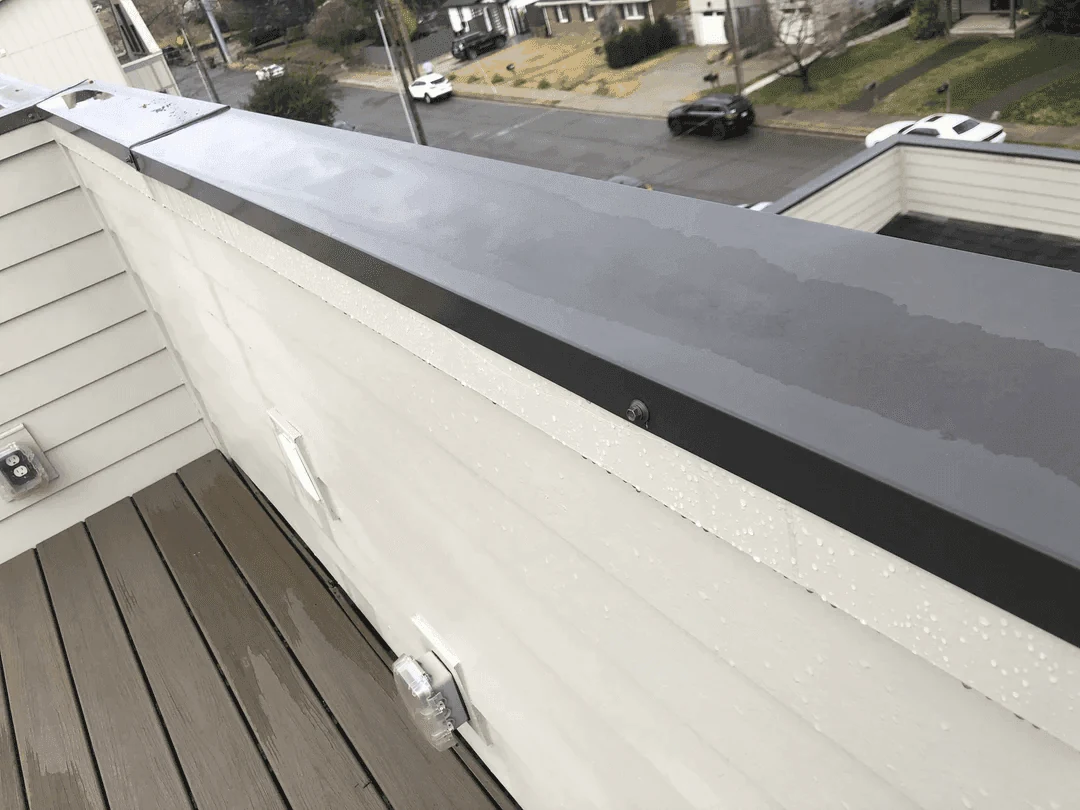
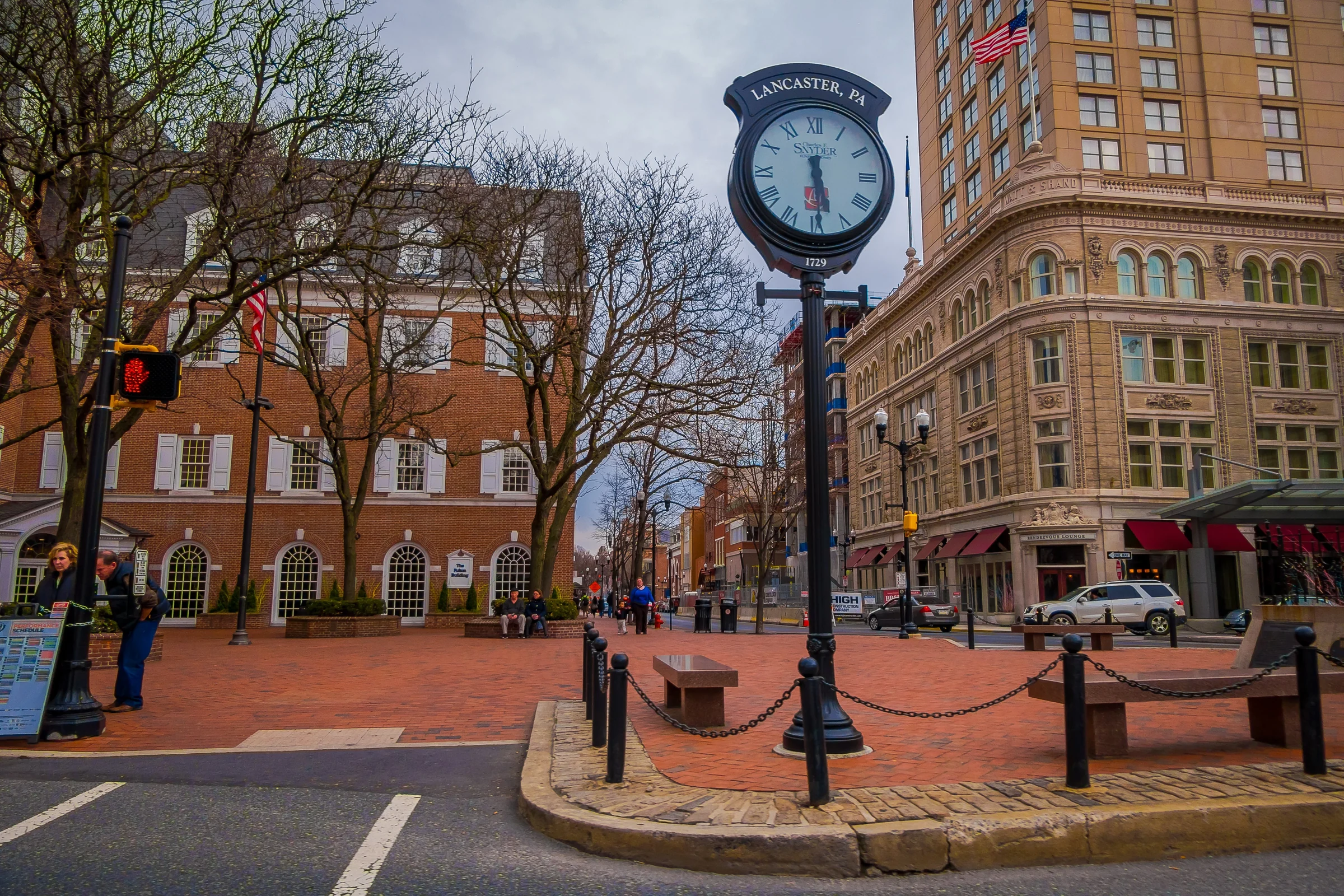
Parapet coping takes the worst of both wind and water: it is the highest point on most flat roofs, fully exposed to uplift, and it channels rainwater and snowmelt off the wall face all season. We fabricate coping to match the building's existing profile, whether that is a traditional cornice-style detail common on older downtown Lancaster storefronts or a simple modern cap on a metal-building warehouse, and we detail the fastening and cleat spacing to current wind standards rather than matching a legacy pattern that has already proven marginal.
Where a coping failure has already let water into the wall assembly, we check for damage below the cap before closing anything back up, since a coping repair on top of a wet wall cavity just delays the real problem.
Masonry parapets on some of the county's older manufacturing and warehouse buildings have also settled or shifted slightly over decades of freeze-thaw cycling, which means a straight run of stock coping will not always sit flush along the full length of the wall. We field-measure rather than order to drawing dimensions alone, so the fabricated coping actually fits the wall as it stands today.
Fastening to Actual Wind Exposure
Edge metal fastening spacing is not one-size-fits-all. A building's height, its exposure category, and whether it sits in an open field near the turnpike interchange or is sheltered by adjacent structures downtown all change what fastening pattern the edge actually needs to hold under a straight-line wind event. We reference ANSI/SPRI ES-1 wind design requirements when detailing new or replacement edge metal so the installed condition matches current practice, rather than whatever fastening pattern was on the roof before.
- Custom-fabricated coping to match existing parapet width and profile rather than a stock size that does not fit
- Gutter and downspout sizing rechecked against current roof area, since additions over the years often outgrow the original drainage design
- Cleat and fastener spacing detailed to the building's specific height and exposure category
- Termination bar and membrane tie-in inspected as part of any edge metal replacement, not treated as a separate scope
- Downspout discharge points checked against grading to confirm water is actually moving away from the foundation
Gutters and Seasonal Water Volume
Gutters on this county's commercial buildings deal with two very different seasonal loads: winter meltwater during a fast thaw after a heavy snow event, and summer downpour volume during a severe thunderstorm that can dump more water in twenty minutes than a slow winter melt spreads across a day. A gutter system sized only for one of those conditions tends to overflow during the other. We size and pitch gutter runs for the heavier of the two loads a given building actually sees.
Downspouts that discharge directly against a foundation or into an undersized storm connection cause their own problems separate from the roof, and we flag that during any gutter inspection or replacement even when it falls outside the roofing scope itself.
On tourism-corridor buildings along Route 30, where storefronts sit close together and gutter runs are often short and highly visible from the street, we also pay attention to how a replacement gutter reads against the building's front facade in addition to how well it performs. A functional gutter that looks wrong on a historic-feeling storefront ends up as its own complaint even after the drainage problem is solved.
Access and Staging on Tight Downtown Lots
Edge metal work on a storefront building near Central Market or the convention center district usually means working from a lift or swing stage over a sidewalk with pedestrian traffic to manage, not a wide-open lot where a crane can set up freely. We plan sidewalk protection, staging permits where the borough requires them, and material handling for those sites well before the crew shows up, since figuring it out on day one on a downtown block costs everyone time.
Open-field sites, like a distribution building at the turnpike interchange or a large production facility with a wide, low roofline, are the opposite problem: plenty of room to stage material and equipment, but often a longer run of edge metal to fabricate and install in one mobilization. We size crew and material delivery to the actual linear footage rather than treating every edge-metal job the same regardless of scale.
Edge Metal and Gutter Questions We Hear
How do we know if our coping needs replacement versus repair?
If the cleats are still sound and the metal itself is not corroded through, a repair or re-fastening is often enough. Once the metal has failed at multiple points or corrosion is advanced, replacement is the more reliable path.
Do you match existing profiles or install a standard size?
We fabricate to match the existing parapet width and detail wherever a building's appearance or historic character matters, rather than defaulting to a stock size.
What wind standard do you detail to?
We reference ANSI/SPRI ES-1 for edge metal fastening on new and replacement work so the detail matches current wind-uplift expectations for the building's exposure.
Can gutter problems cause a roof leak that looks unrelated?
Yes. Overflowing or backed-up gutters routinely push water under adjacent flashing and membrane, showing up as a leak well away from the gutter itself.
Is edge metal work usually part of a reroof or a standalone repair?
Both. We handle it as standalone repair when the rest of the roof is sound, and as part of a full reroof scope when the whole assembly is being replaced.
Repairing What Wind, Hail, and Heavy Snow Actually Do to a Flat Roof
Explore this commercial roofing scope
TPO Specs for the Turnpike-Exit Warehouse Corridor
Explore this commercial roofing scope
Acrylic Coatings for the Amish-Country Tourism Strip
Explore this commercial roofing scope
Built-Up Roofing on Institutional Campuses That Can't Go Off-Line
Explore this commercial roofing scope