
Spray Foam for Irregular Rooflines on the Tourism Corridor
The inns, theaters, and retail-village buildings scattered through Strasburg, Bird-in-Hand, and Intercourse rarely have the simple rectangular roof geometry a warehouse spec is written around, and spray polyurethane foam's ability to self-flash irregular shapes and add insulation value in one application is why it comes up often in that part of the county. This page covers where SPF fits and what the submittal needs to show.
Why Tourism-Corridor Buildings Suit a Foam Roof
Strasburg Rail Road's visitor buildings, the inns and smorgasbord-style restaurants around Bird-in-Hand, and the retail-village structures at complexes like the one in Intercourse have often been added onto and reconfigured multiple times as the tourism business around them has grown, leaving roof lines with valleys, dormers, and transitions that a sheet membrane has to be cut and seamed around at every turn.
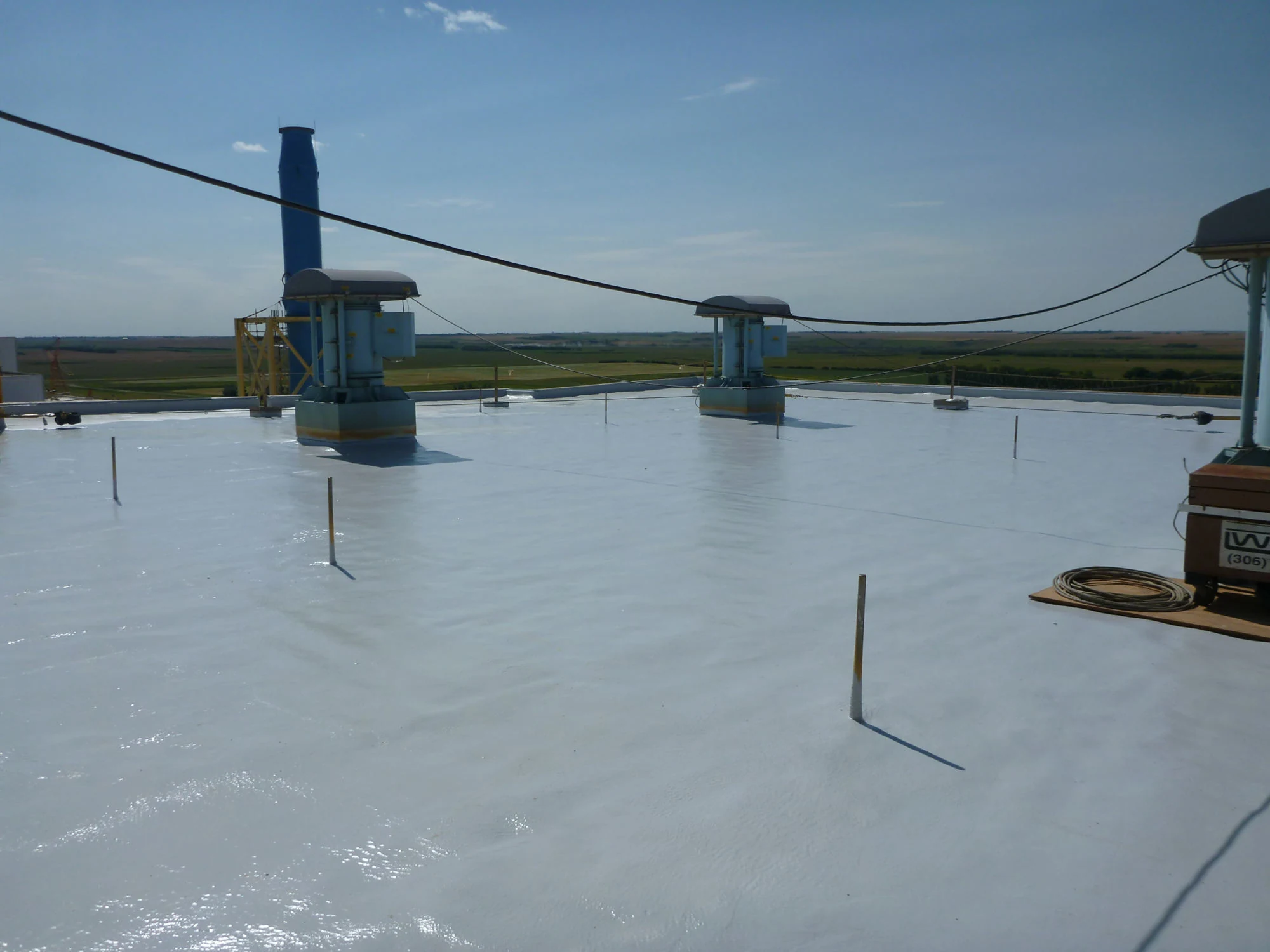
Spray polyurethane foam goes on as a liquid that expands and cures into a continuous, monolithic insulating layer, which means far fewer seams and terminations to detail on a complex roofline than a single-ply or modified bitumen system would require on the same building. A silicone or acrylic topcoat over the cured foam provides the UV-resistant, walkable wearing surface.
Insulation Value in a Single Application
Foam's other advantage on these older tourism-corridor buildings is that it adds meaningful R-value directly at the roof deck in one pass, which matters on inns and retail buildings that were often built or expanded without much attention to roof insulation in the original construction. Retrofitting insulation into an existing low-slope assembly usually means tearing off the roof to add board insulation underneath a new membrane; foam adds that thermal value from above without disturbing whatever's happening at the deck level.
We size foam thickness against both the structural roof condition and the insulation target the owner wants, since foam depth is a variable in the spec rather than a fixed product thickness the way a TPO sheet's mil rating is.
Ronks' Large Entertainment Venue Roofs
Ronks' larger entertainment venue buildings present a different scale challenge: big-box roof fields with theatrical rigging, HVAC serving large occupied auditoriums, and rooflines that mix flat sections with sloped transitions at the building's front-of-house architecture. Foam's ability to taper thickness across a field also lets us build in additional slope toward drains on a roof that wasn't originally designed with much pitch, correcting a drainage problem as part of the same application rather than as a separate tapered-insulation project.
Rooftop rigging points and any structural anchors serving stage or auditorium systems get identified and reinforced separately before foam application, since those attachment points carry loads a standard roof assembly wasn't built to support.
Maintenance Requirements Owners Need to Plan For
Foam roofs need a maintenance commitment that a membrane roof doesn't: the topcoat has a recoat interval, typically every ten to fifteen years depending on the coating product and UV exposure, and skipping that recoat lets UV degrade the foam underneath faster than the manufacturer's warranty anticipates. We put that recoat schedule directly into the closeout documentation and the owner's O&M package, not as a verbal recommendation that gets forgotten after the crew leaves.
Foam roofs are also more susceptible to hail and impact damage than a membrane system if the topcoat isn't maintained at the right mil thickness, which is a real consideration on a county that does see occasional severe thunderstorm activity through the summer months.
Working Around Operating Businesses During Tourist Season
Most of these buildings do their busiest business in the warmer months, which is also the best weather window for foam application. We schedule tear-off and application work around each business's specific slow season where possible, whether that's a smorgasbord restaurant's midweek closure or a retail village's off-season calendar, rather than assuming every tourism-corridor client can absorb disruption the same way.
Odor during application is a real consideration for adjacent food-service tenants in a shared retail-village building. We coordinate application timing and any temporary ventilation needs directly with neighboring businesses before spraying begins, not as an afterthought once the crew is already on site.
What goes in an SPF submittal package for a tourism-corridor building:
- Foam thickness and density specification matched to structural and insulation targets
- Topcoat product data with recoat interval and UV-resistance rating
- Tapered application plan for any drainage correction built into the foam layer
- Rigging or structural anchor reinforcement plan where applicable
- Recoat maintenance schedule included in the owner's closeout O&M documentation
Common Questions on Spray Foam Roofing
Does spray foam work on a roof with a lot of existing patches?
Often yes, since foam can be applied over many existing substrates as long as the deck is structurally sound and any wet areas are addressed first. We survey the existing roof before recommending foam over tear-off.
How often does the topcoat need to be recoated?
Typically every ten to fifteen years depending on the specific coating product and UV exposure. We build that interval into the closeout documentation so it isn't forgotten.
Can foam correct a roof with poor drainage?
Yes, foam's tapered application can build in slope toward drains as part of the same job, which is one of its practical advantages over a flat membrane sheet on an older building.
Is foam durable against hail?
It holds up reasonably well when the topcoat is maintained at the correct thickness, but a neglected topcoat leaves the foam more exposed to impact damage than a standard membrane roof.
How long does a foam roof system last overall?
With regular recoat maintenance, twenty to thirty years or more is achievable, since the foam layer itself can be recoated repeatedly rather than requiring full replacement on the manufacturer's standard schedule.
60-Mil TPO for Lancaster County Distribution and Cold-Storage Roofs
Explore this commercial roofing scope
80-Mil TPO for Food Processing and Manufacturing Plant Roofs
Explore this commercial roofing scope
Black EPDM for Occupied Senior Living Campuses
Explore this commercial roofing scope
White EPDM for Healthcare and Cold-Adjacent Buildings
Explore this commercial roofing scope