EPDM on Lancaster County's Older Manufacturing Stock
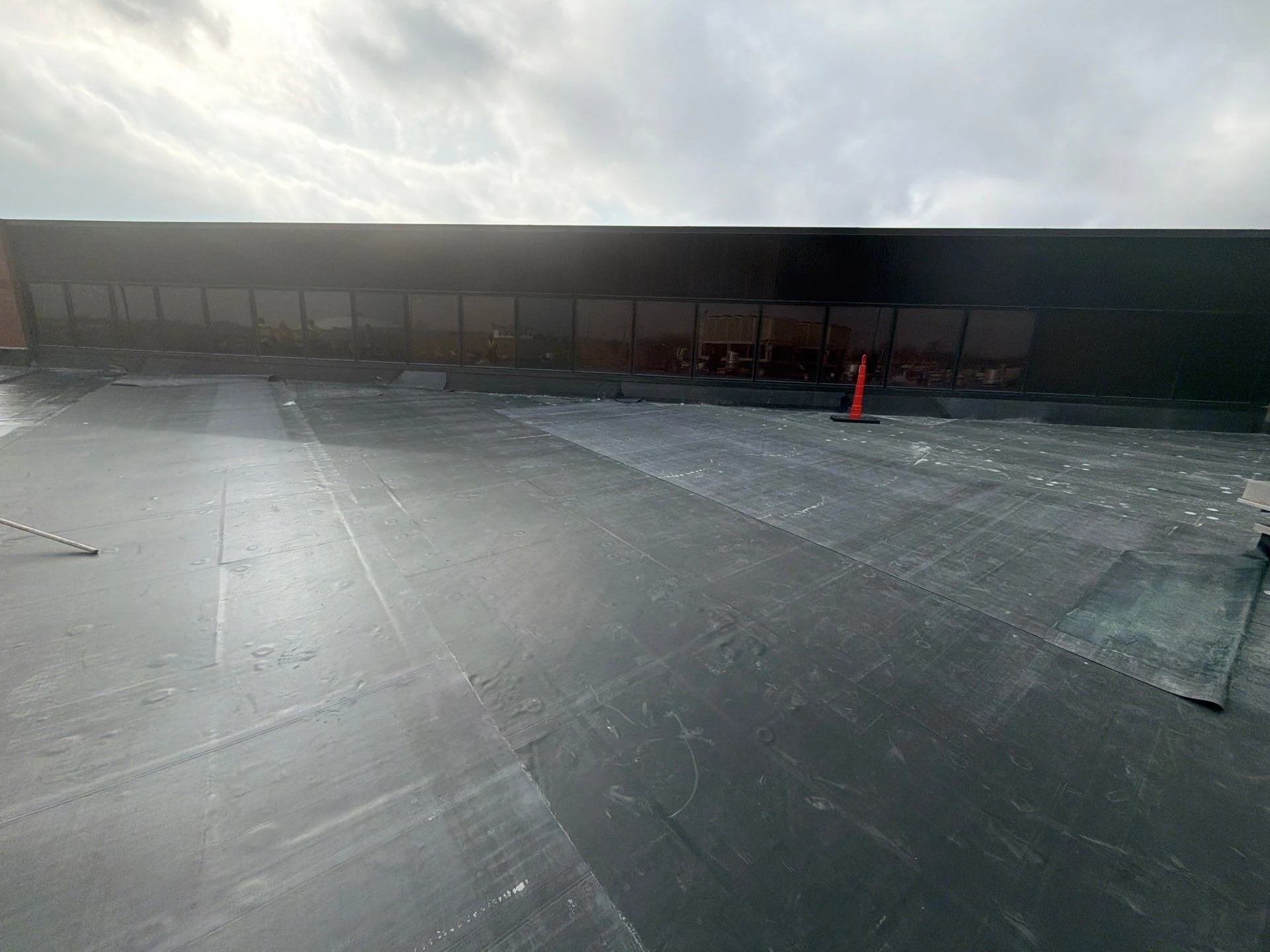
A lot of the manufacturing and ag-supply buildings scattered through Columbia, Terre Hill, and the Route 23 corridor near Leola are still running EPDM that went on twenty or more years ago. This page covers when we recommend staying with EPDM on a recover, when we recommend switching systems, and how we price either path.
Columbia's Riverfront Industrial Buildings Carry a Lot of Ballasted EPDM
Columbia's industrial legacy along the Susquehanna left behind a mix of older manufacturing and warehouse buildings, many still running ballasted or ribbon-adhered EPDM from an era when it was the default low-slope system. Ballasted roofs are durable but heavy, and before we recommend a recover we confirm the deck and structure can carry the existing stone plus new membrane, especially on older buildings where the original structural design didn't anticipate a second roof system stacked on top.
Route 30 access into Columbia keeps material delivery straightforward, but a lot of these riverfront buildings have tight lot lines and limited staging space. We plan crane picks and material drops around what the site actually allows rather than assuming a standard laydown area.
Terre Hill and Christiana: Concrete Products and Ag-Supply Roofs
Terre Hill's concrete products manufacturing runs heavier rooftop equipment than a typical warehouse - dust collection systems, compressor housings, and process exhaust that all add point loads and penetrations an EPDM roof has to be detailed around. Christiana's rail-side ag and building-supply operations run a similar mix of older single-ply roofs with equipment added over decades, often without updated flashing to match. We treat every added curb or duct penetration as a place the original roof crew never planned for, because that's usually exactly what it is.
Leola's Route 23 industrial and ag-business strip carries a similar profile: functional buildings, older roofs, and rooftop equipment that's grown since the original installation. On buildings like these, a full condition survey before quoting usually turns up more penetrations and patch history than the owner remembers, which changes the scope from a simple recover to a more involved repair-and-recover plan.
Repair, Recover, or Replace: How We Make the Call
- Seam condition and adhesive bond at laps and flashings
- Ballast displacement or membrane exposure from wind events
- Insulation moisture content, checked by core cut where warranted
- Deck condition, particularly steel deck corrosion at drains
- Age of the existing system against typical EPDM service life
- Whether current rooftop equipment load exceeds original design
A dry EPDM roof with sound insulation and manageable seam wear is often a strong recover candidate - new membrane over the existing insulation layer, with select repairs where needed. A roof with widespread wet insulation or a compromised deck usually costs more to recover than to replace once labor and material are compared honestly.
Why We Still Spec EPDM on Certain Buildings
EPDM isn't the default it was twenty years ago, but it still makes sense on buildings with simple roof geometry, limited rooftop equipment, and an owner who values lower material cost over the welded-seam speed of TPO. Black EPDM also performs well on buildings where winter heat retention matters more than summer reflectivity - some of the older manufacturing buildings in this territory run minimal interior heating, and a darker roof surface helps rather than hurts in that situation.
White EPDM is available where reflectivity matters and an owner still prefers EPDM's adhesive-seam installation over TPO's heat welding. We spec the color and attachment method against the building's actual operating conditions rather than assuming one system fits every roof in the portfolio.
Prevailing Wage and Bid Documentation on EPDM Recovers
Some of the ag-supply and municipal-adjacent buildings we quote in this territory fall under prevailing wage requirements depending on funding source. We flag that early in the estimating process and price labor against the correct wage determination so the bid number holds up through award. Every EPDM proposal includes membrane thickness, seam tape or adhesive specification, insulation R-value, and manufacturer warranty terms - the same documentation a purchasing department expects on a small recover or a full campus replacement alike. A facilities manager comparing three bids should be able to line up our numbers against a competitor's without guessing what's included.
We also keep a copy of every submittal package on file after the job closes out. If a warranty claim comes up five years later, or a new facilities director inherits a building without a paper trail, we can usually reconstruct what system went on the roof and when.
Questions Owners Ask About EPDM Recovers
Is EPDM still a good option for a new roof, or only for recovers?
Both. EPDM still makes sense on simpler roof geometries and buildings where an owner prioritizes lower material cost over TPO's welded-seam installation speed.
How do you know if a ballasted roof can support a recover?
We review the structural drawings when available and confirm with a structural engineer if the building's design load is uncertain, particularly on older buildings where stone ballast adds significant weight.
What causes most EPDM failures in this area?
Seam and flashing failure from age, plus penetrations added after the original installation without matching flashing detail. Ponding water accelerates both.
Can you recover an EPDM roof without removing the existing membrane?
Often, yes, if the insulation underneath is dry and the deck is sound. We confirm both with a core cut before recommending a recover over full tear-off.
Do prevailing wage rules apply to private manufacturing buildings?
Usually not, but some ag-supply and municipal-adjacent projects in this territory do carry that requirement depending on funding source. We check and flag it before pricing labor.
Getting Water Off an Open Roof Before It Reaches the Building Interior
Explore this commercial roofing scope
Documenting Roof Damage in a Format an Adjuster Can Actually Use
Explore this commercial roofing scope
R-Panel Metal for the Turnpike-Exit Warehouse and Auto Auction Corridor
Explore this commercial roofing scope
Modified Bitumen on Downtown Lancaster's Older Roof Stock
Explore this commercial roofing scope