Carlisle SynTec: A Membrane Line With Its Home Plant an Hour From Our Jobs
Carlisle SynTec's manufacturing footprint sits close enough to Lancaster County that calling them a local manufacturer isn't a stretch. We specify their TPO and EPDM lines often on the larger distribution and continuing-care jobs near the Denver and Ephrata turnpike interchanges, and proximity to the plant is one small factor in a decision that mostly comes down to warranty structure and product range.
Why Carlisle Comes Up on Turnpike-Corridor Bids
Most of the large distribution buildings going up or getting reroofed near the Route 222 and turnpike interchanges are held by institutional or REIT ownership groups planning to hold the asset for decades, not a few years. Carlisle's warranty structure, particularly at the higher no-dollar-limit tiers, fits that kind of long-hold math better than a shorter standard term does, and that's the conversation that usually puts them on the bid in the first place.
Being close to their Carlisle, Pennsylvania plant doesn't change freight timelines dramatically in an era of regional distribution, but it does mean local reps and technical staff are a short drive rather than a flight away when a warranty inspection or a field question comes up mid-project.
Sure-Weld TPO for Denver and Ephrata Interchange Warehouses
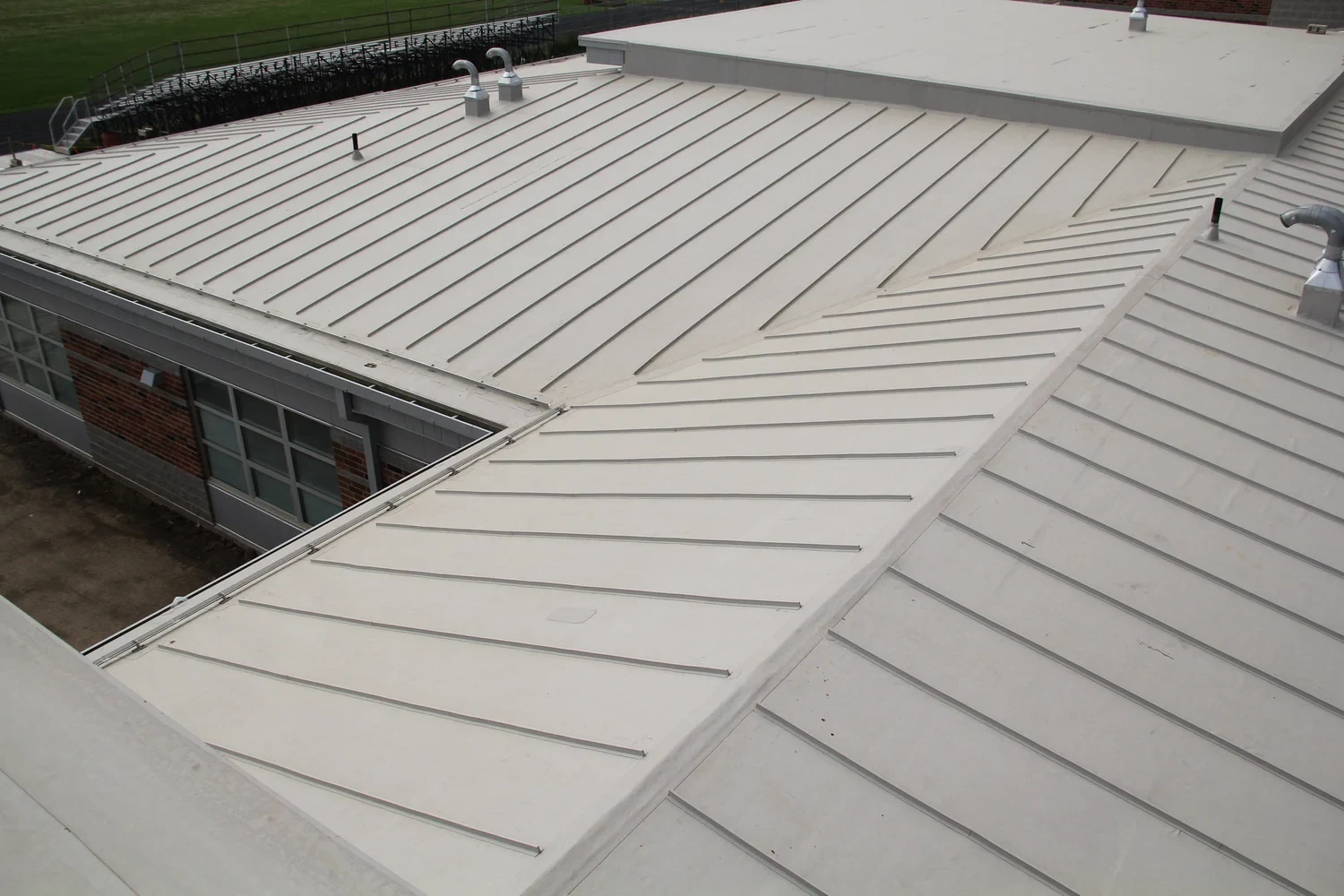
Sure-Weld, Carlisle's TPO line, is what we bid most often on the big-box distribution roofs clustered around the Denver and Ephrata interchanges. We don't default to one gauge; a warehouse expecting light rooftop traffic gets a lighter mil spec than one carrying solar arrays or heavy mechanical additions, and we walk that gauge decision through with the owner rather than picking whichever number pencils cheapest.
FleeceBACK, Carlisle's fleece-reinforced backing option, gets priced as an alternate whenever a roof has documented heavy foot traffic, maintenance staff working rooftop units daily, for instance. We show the owner both numbers, standard membrane over cover board against fleece-backed membrane, so the puncture-resistance decision gets made against real pricing instead of a general recommendation.
Sure-Seal EPDM on Willow Street and New Holland Care Campuses
Sure-Seal, Carlisle's EPDM line, is the product we reach for on continuing-care campus recover work around Willow Street and New Holland, where an existing black EPDM section is already down and introducing a different membrane family mid-campus would create a maintenance headache for facilities staff down the line. Matching what's already there, when it's still sound, keeps the roof simpler to manage for the next twenty years.
Older manufacturing buildings around Columbia and Terre Hill get the same treatment during recover jobs, provided the existing ballasted or adhered EPDM base is structurally sound enough to build on. Carlisle's factory-taped seams take a lot of the splice-quality variability out of the install compared to the field-glued methods common on older EPDM roofs, and that's a standard we hold no matter whose rubber membrane we're working with.
How Carlisle's Warranty Tiers Actually Scale
Three things drive how long a Carlisle warranty runs on a given roof: how thick the membrane is, how it's attached, and whether the assembly includes a cover board. Nothing about the installing contractor factors in beyond simply following Carlisle's published spec to the letter. A thinner membrane on a mechanically attached system generally lands in a fifteen-to-twenty-year bracket; step up to a heavier, cover-boarded, fully adhered or induction-welded assembly and the term extends into the twenty-five-to-thirty-year range, sometimes with a no-dollar-limit structure that pays full repair cost rather than a prorated amount as the roof ages.
That paperwork only gets issued after Carlisle's own field team inspects the finished installation, which we build into the closeout schedule on every Carlisle job as a matter of course rather than something we chase down after the fact.
We price the complete assembly against whichever tier an owner is weighing, not the membrane alone, because insulation choice and cover board inclusion move both the bid number and the warranty eligibility together. For a facilities board comparing our number line by line against a competing proposal, every figure needs to trace back to a specific Carlisle product and its published spec, with nothing left ambiguous about what's actually covered.
- Product data sheets naming the exact membrane thickness and attachment method bid
- Fastening pattern drawing sized to the project's wind uplift report
- Warranty tier documentation with any cover board or FleeceBACK requirements spelled out
- Manufacturer field inspection scheduled ahead of warranty issuance
- Closeout binder with as-built notes for the next facilities staff to inherit
Why Long-Hold Institutional Owners Lean Toward the Higher Tier
An owner planning to hold turnpike-corridor distribution product through its entire roof life usually finds the arithmetic favors the longer, no-dollar-limit term once we lay maintenance and eventual replacement costs against the extra upfront cost of the heavier assembly. That's not automatic, though - a shorter planned hold or a different capital strategy can make the standard tier the smarter financial call, and we run that comparison in plain numbers during the proposal rather than assume every institutional client wants the top tier by default.
Where Our Claims Stop
Everything above describes how we actually install Carlisle systems and how we coordinate their inspection process. It isn't a claim to a specific certification tier or an exclusive relationship with the manufacturer, and we're careful not to let it read as one. Carlisle's own standing requirements shift, and the tier we currently hold is something a purchasing board or facilities committee should ask us about directly for the project in front of them rather than infer from general language on a page like this.
Carlisle Questions From Lancaster County Boards
Why would a facilities board pay more for Carlisle over a cheaper TPO bid?
Base TPO chemistry doesn't vary enormously by manufacturer. The real difference shows up in warranty structure and mil-thickness range, and Carlisle's no-dollar-limit options at the top tier are why institutional owners planning a long hold often land there.
What does "no-dollar-limit" mean in practice?
It means Carlisle pays the full cost of a qualifying repair for the life of the warranty term instead of a shrinking or capped amount, as long as the original install and any later work followed their published spec.
Is a cover board required to get the longest warranty term?
On the twenty-five-to-thirty-year tier with 80-mil TPO, generally yes. That cost gets built into the estimate from the start so the board sees the full price behind the warranty length it's choosing, not a stripped-down number that grows later.
Can new Sure-Seal EPDM tie into an existing rubber roof from another brand?
Usually, since EPDM splice chemistry is broadly compatible across manufacturers at the transition point. We confirm the specific compatibility with both manufacturers' technical guidance before we finalize that detail.
Does someone from Carlisle actually walk the roof before the warranty is final?
Yes. Their field inspection of the completed work is a required step before the warranty paperwork issues, and we schedule it as a standard part of closing out any Carlisle project.
Versico Systems on Competitively Bid Distribution Roofs
Explore this commercial roofing scope
GAF Commercial Systems on School, Municipal, and Retail Roofs Here
Explore this commercial roofing scope
Elevate's EPDM Heritage on Care-Campus Recovers
Explore this commercial roofing scope
Johns Manville's Asphalt Heritage on Older Riverfront Buildings
Explore this commercial roofing scope