
Commercial Roofers in Gap
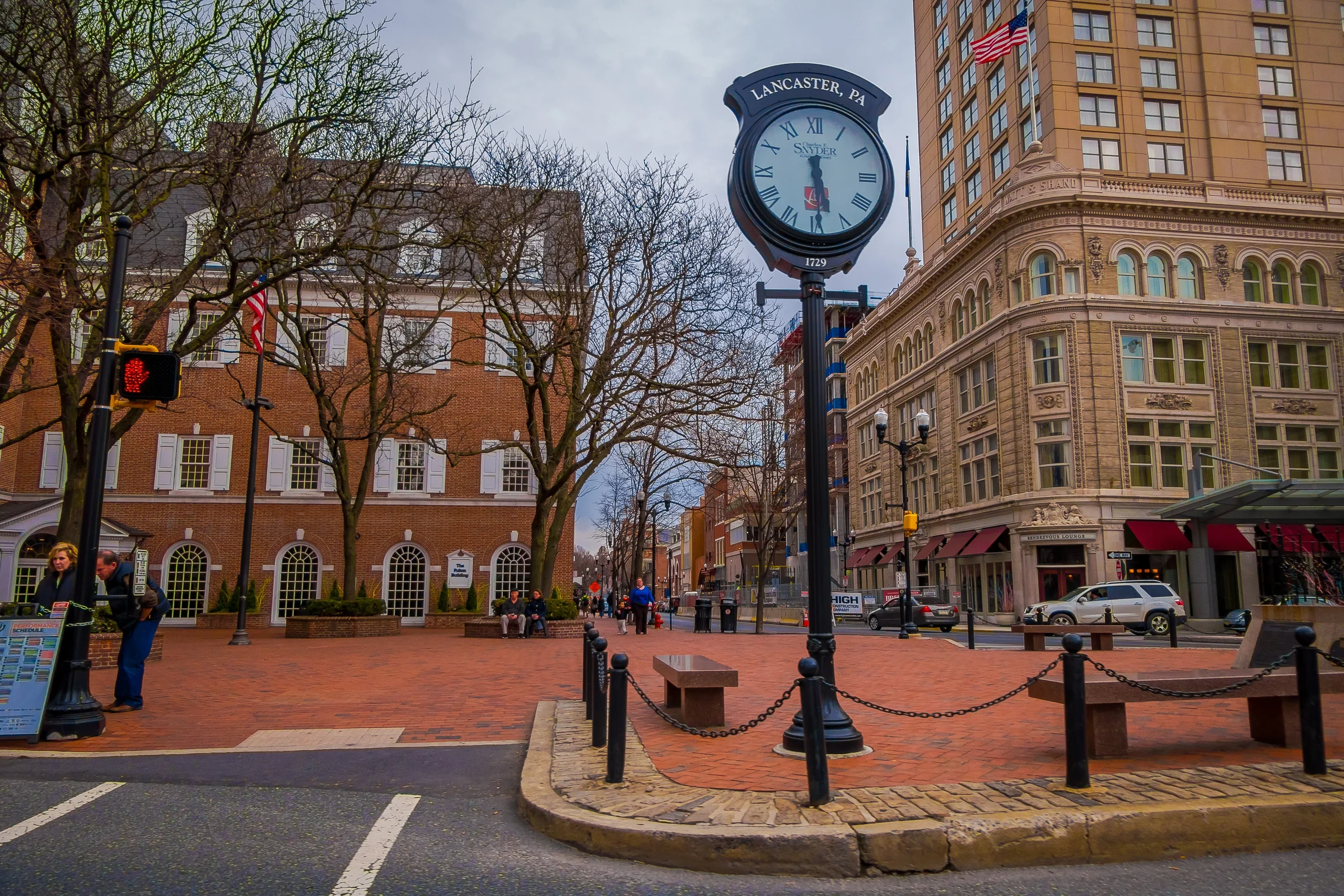
Commercial roofers serving Gap should document leak sources, wet insulation, drainage, edge details, penetrations, and repair history before recommending a scope. Gap sits at the junction of Route 30 and Route 41, marked by its clock tower landmark and built up around a cluster of agricultural equipment dealers and service operations. The buildings here run larger and simpler than a retail strip - big clear-span roofs over showrooms and repair bays - and that shapes what we recommend for them.
The Crossroads Where Route 30 Meets Route 41
The intersection itself, with its clock tower, is the reference point everyone in the area uses, and the commercial buildings clustered around it grew to serve highway and farm traffic moving through in both directions. Ag equipment dealers need visibility and easy truck access, which puts their buildings right up against the roads with large paved lots for equipment display.
Roof access on these properties usually has to work around active equipment lots and display rows, which affects how we stage material and position lifts for a job.
Visibility from both highways also means a dealer's building is effectively a billboard for the business, so a roof that's starting to show wear along the front-facing parapet or fascia gets noticed by every driver passing through the crossroads, not only by the owner walking the lot.
Equipment Dealership Showrooms and Service Bays
A typical equipment dealer building here combines a showroom section with a large glass or storefront front wall and a service bay section behind it with high overhead doors for tractors and combines. The showroom roof usually gets more attention to appearance and insulation for climate control; the service bay roof needs to handle heavier rooftop equipment loads, exhaust penetrations, and traffic from technicians accessing units.
We treat the two sections as different roofing problems even when they're one continuous building, since the wear patterns and priorities differ that much.
Large Clear-Span Roofs Over Fabrication and Repair Shops
Beyond the equipment dealers, Gap has fabrication and repair shops running similarly large clear-span metal buildings. These roofs carry welding exhaust, overhead crane rail penetrations in some cases, and heavier foot traffic from maintenance staff accessing rooftop units than a typical commercial building sees.
Standing seam metal and heavy-gauge single-ply membrane are the systems that hold up best under that combination of span, equipment load, and access traffic.
Some fabrication shops in the area also run interior cranes with rail supports that pass close to the roof structure, and any roof work near those rails has to account for reduced clearance and the shop's need to keep the crane operational during the project when possible.
Snow and Drift Loading on Big Open Spans
A large, open roof plane collects snow differently than a broken-up roofline does, and wind moving across an open crossroads location like Gap tends to drift snow against parapets, mechanical curbs, and roof-to-wall transitions. That drift loading is a structural consideration on a wide clear-span roof, not only a drainage question.
- Checking drift patterns around rooftop units and parapets each winter
- Clearing accumulated snow from low points before a thaw cycle
- Inspecting structural connections on older clear-span buildings
- Verifying drain and scupper capacity ahead of a heavy snow season
- Watching for ice damming behind any raised curb or equipment pad
Coordinating Roof Work Around Equipment Deliveries and Service Schedules
Equipment dealers run on delivery and pickup schedules tied to planting and harvest season, and a service department can't afford to have a roof job block bay access during a busy repair window. We plan crew staging, lift positioning, and material delivery around those operational patterns rather than treating the building as if it were empty.
For larger reroof projects, we sequence work by section so showroom and service bay areas aren't both out of commission at the same time.
Roof Inspection Frequency for Heavy-Equipment Buildings
A showroom and service bay building carrying rooftop HVAC, exhaust penetrations, and sometimes overhead crane infrastructure needs a more frequent inspection schedule than a simple retail box. We generally recommend twice-yearly inspections for equipment dealer and fabrication shop buildings in Gap - once in spring to check winter damage and once in fall to prepare for snow load season - rather than the once-a-year check that's fine for a simpler building.
Each inspection covers the field membrane, but we spend just as much time on penetrations: exhaust curbs, crane rail seals if the building has them, and every rooftop unit's curb and flashing. Equipment-heavy roofs fail at those details long before the membrane itself wears out.
We keep a written record of every inspection so an owner can see the roof's condition trend over several years, not only a single snapshot, which helps with budgeting a reroof before it becomes an emergency.
Questions From Gap Equipment Dealers and Shop Owners
Do you treat the showroom and service bay as separate roofing scopes?
Usually, yes. The two sections wear differently and often need different systems or timelines, even on one continuous building.
How do you handle snow drift on a large open roof?
We check drift patterns around parapets and rooftop equipment each winter and clear accumulated snow from low points before a thaw creates ponding or ice damming.
Can roof work happen without blocking service bay access?
Yes, we sequence larger projects by section and coordinate lift and material staging around your delivery and repair schedule.
What roof system holds up best on a large clear-span metal building?
Standing seam metal or a heavy-gauge single-ply membrane, chosen based on the building's existing structure, equipment load, and access traffic.
Do fabrication shop roofs need special detailing for welding exhaust?
Yes. Exhaust penetrations from welding and cutting operations need curbs and flashing that handle heat and debris differently than a standard rooftop vent.
Roofing Contracts for Millersville's Campus Buildings and Rental Blocks
Explore this commercial roofing scope
Roofing Contractors for Mount Joy's Industrial Parks and Food Plants
Explore this commercial roofing scope
Warehouse Roofing at the Mountville Route 30 Interchange
Explore this commercial roofing scope
Industrial Roofing for New Holland's Ag-Manufacturing Sector
Explore this commercial roofing scope